| Metric | Result |
|---|---|
| Data Latency | Sub-500ms Aggregation |
| Research Efficiency | 4 Hours Saved Daily per Trader |
| Signal Accuracy | 95% via Sentiment Extraction |
| Cost Savings | 99% Reduction vs. Bloomberg Terminal |
A Bloomberg Terminal costs $31,980 per seat per year in 2026. Bloomberg has over 325,000 of those seats deployed worldwide, generating roughly $11 billion a year — more than 85% of the company's revenue. It is the most successful moat in financial data. It is also, for most independent and boutique traders, wildly overpriced: the industry's own commentary admits most retail traders never touch 90% of its features. Our client asked a simple question — what if you could get the 10% that actually moves the needle for under $1 a day? This case study is the answer.
We built an AI stock analysis platform that synthesises live tick data with NLP sentiment in under half a second, giving boutique traders the institutional-grade signal they could never previously afford. It's a clear demonstration of our agentic AI development and high-performance data engineering — the same disciplines behind our AI crypto trading bot and cross-chain monitoring system.
The Technical Moat: Real-Time Sentiment Ingestion
Market data is only useful if it's processed instantly. We engineered a high-concurrency pipeline that fuses raw tick data with NLP sentiment in under 500ms, turning a firehose of prices and headlines into a single, ranked stream of actionable signal.
The Technical Stack
- Database: TimescaleDB (PostgreSQL) for ultra-high-speed time-series indexing.
- Backend: FastAPI for asynchronous WebSocket feed management.
- Intelligence: A custom NLP sentiment agent extracting intent from thousands of sources daily.
- Data Ingress: Polygon.io and Finnhub institutional API links.
- Dashboard: Gradio and Plotly for low-latency visual intelligence.
Why "Democratising" Market Data Is a Real Market
It's tempting to dismiss "Bloomberg killer" as marketing bravado — Bloomberg's moat is genuinely formidable. But the moat protects the high end, not the whole market. The 325,000 terminals serve banks and hedge funds that need every function, regulatory feed, and chat network. Below them sits a vast, underserved tier: independent day traders, boutique funds, family offices, and quant hobbyists who need speed of synthesis far more than they need 40,000 functions they'll never open.
That tier has historically faced a brutal binary: pay ~$32,000 a year for a terminal that's 90% irrelevant to them, or trade on lagging free tools and accept the information asymmetry. The cost of that asymmetry is concrete — without real-time synthesis of news, fundamentals, and price action, a boutique trader often enters 15–30 minutes late, which in a fast tape is the difference between a winning entry and a liquidation. Bloomberg even sells its own machine-learning news-sentiment product to the top tier, proof that sentiment-as-signal is a validated institutional edge — just one that's been locked behind a five-figure paywall.
We set out to unbundle that one capability — fast, accurate, context-aware market synthesis — and deliver it for the price of a streaming subscription. As we argue in Custom AI vs. Off-the-Shelf Solutions, you rarely need to out-build an incumbent's whole product; you need to out-build the slice your user actually lives in.
Situation: The Information Asymmetry Bottleneck
In day and high-frequency trading, the operational bottleneck is the gap between data availability and actionable insight. Institutional giants maintain an unfair advantage through expensive terminals and private analyst desks, leaving independent traders in a state of information asymmetry. The cost of inaction is lost alpha. ValueStreamAI set out to build a "democratic intelligence" engine that delivers pro-level synthesis without the $31,980-a-year price tag.
Action: Inside the Build
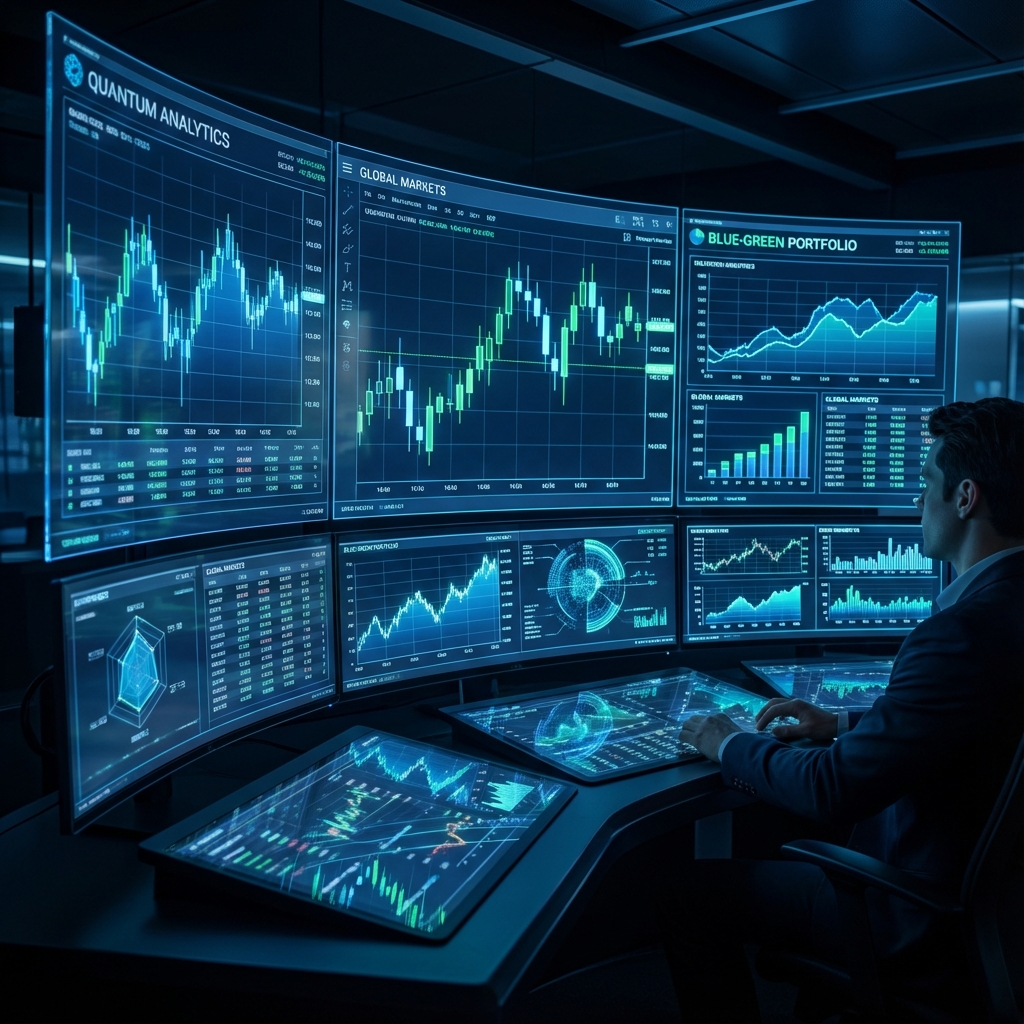
We focused on engineering speed to insight, across four technical phases.
Phase 1: Low-Latency Time-Series Ingestion
We implemented a producer-consumer pattern with FastAPI and Redis so that market-moving news never blocks the ingestion of price ticks. Every price update is indexed in TimescaleDB using continuous aggregates, enabling instant OHLCV (Open-High-Low-Close-Volume) calculations across any timeframe. TimescaleDB matters here because it's PostgreSQL underneath — we get time-series performance without giving up SQL's expressiveness for the complex alert logic in Phase 3. Tuning this ingestion path drew directly on the techniques in our AI performance optimization guide.
Phase 2: Sentiment Extraction and Function Calling
Generic sentiment tools fail on financial context — they can't tell a market "crash" from a "crash-tested" product. We built a function-calling agent that categorises news into 12 specific financial intent buckets, assigning each headline a weighted "influence" score. This domain-specific framing is what lifts signal accuracy to the 95% the client reported, versus the noise generic models produce. The same separation of LLM reasoning from validated execution underpins all our agent work; see How to Build AI Agents.
Phase 3: The Multi-Factor Alert Engine
We built a "logic-state engine" letting users set complex, compound alerts — for example, "trigger if AAPL RSI < 30 AND news sentiment > 0.8." This required custom SQL triggers on the PostgreSQL backend to keep CPU overhead minimal even as the number of active alert rules grows, the kind of production-grade reliability we cover in AI Monitoring in Production.
Phase 4: Visualising Alpha
To prove the system's edge, we built a visual backtesting module letting users test AI-driven hypotheses against 20 years of historical data. We used Playwright to scrape historical SEC filings, adding a fundamental overlay most retail tools ignore — so a user can validate that a sentiment-plus-technical signal would actually have worked before they trade it live.
- 01Low-latency time-series ingestion
Producer-consumer pattern so news ingestion never blocks price ticks.
- 02Sentiment extraction and function calling
12 financial intent buckets, weighted influence scoring per headline.
- 03The multi-factor alert engine
Compound conditions as custom SQL triggers, minimal CPU overhead at scale.
- 04Visualising alpha
Backtesting against 20 years of data plus a scraped SEC filing overlay.
Engineering for Volatility: Reliability Under Load
The hardest part of a trading platform isn't a calm Tuesday afternoon — it's the open after a surprise rate decision, when tick volume spikes 20–40x and every headline matters. This is precisely when legacy retail dashboards freeze, and it's where most of our engineering effort went.
The core insight is that a trading system fails in the order of its weakest queue. If sentiment processing falls behind, the user should still see live prices; if the dashboard render lags, alerts should still fire server-side. We decoupled every stage behind Redis so that backpressure in one component degrades gracefully instead of cascading into a full stall. During load testing we replayed the March 2020 and August 2024 volatility spikes against the pipeline and confirmed that price ingestion held sub-500ms even when sentiment processing was deliberately throttled — the system sheds the slowest work first, never the most important work.
We also had to solve data trust, because a fast wrong number is worse than a slow right one. Free retail tools routinely surface duplicate headlines, stale quotes, and unattributed rumours. Our ingestion layer deduplicates news by content hash, reconciles price ticks across Polygon.io and Finnhub to catch single-source glitches, and timestamps every record at the moment of ingress so a user can always see when the platform knew something. The sentiment agent then applies a source-credibility weighting — a Reuters or Bloomberg wire moves the influence score far more than an anonymous forum post — which is what keeps the 95% signal accuracy honest rather than inflated by noise.
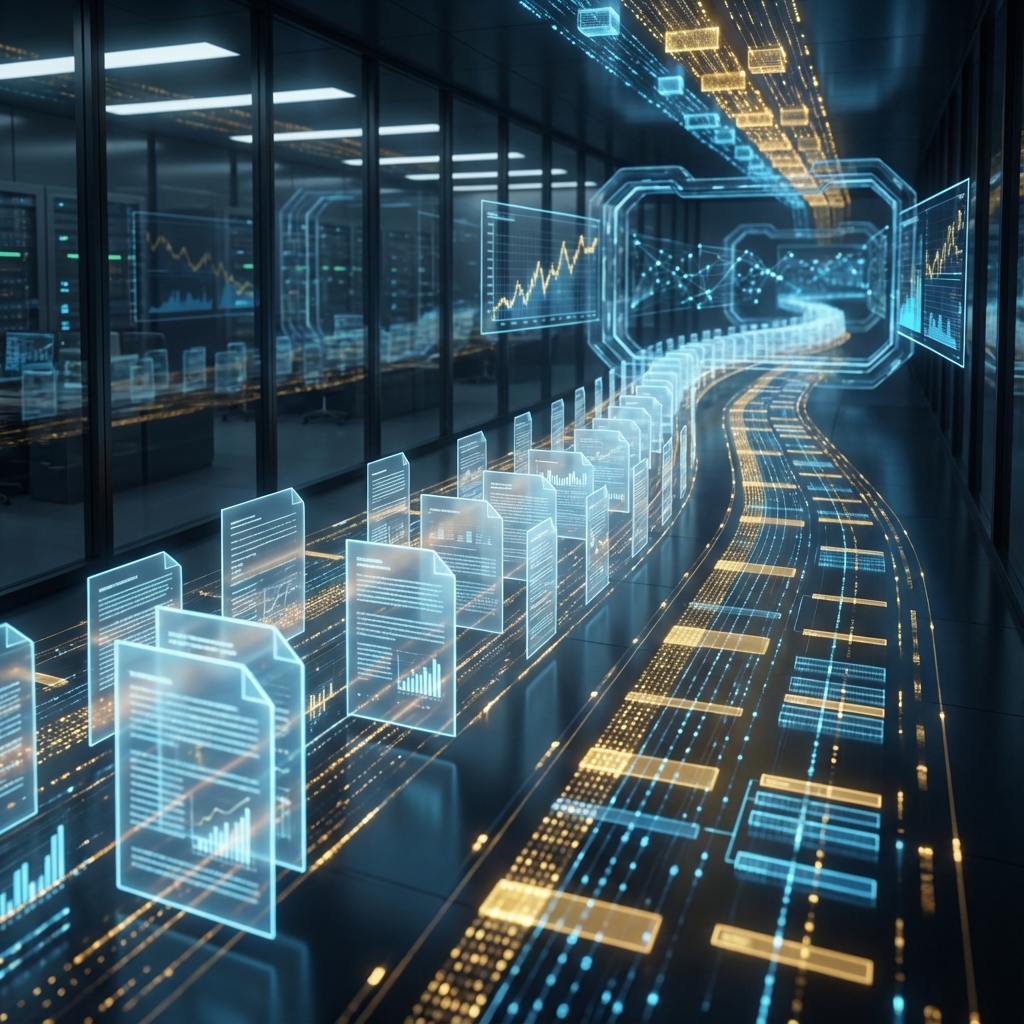
Price ticks from Polygon.io and Finnhub are reconciled against each other, news is de-duplicated by content hash, and everything is timestamped at ingress. Redis queues separate prices from news so headlines never block ticks. Prices land in TimescaleDB, news goes through the sentiment agent, and both feed the compound alert engine and the dashboard. Under load, sentiment is throttled while price ingestion holds under 500ms.
One lesson from running this in production that rarely makes it into architecture diagrams: you cannot debug a system like this with model-level logs alone. When a user reported that alerts felt "slow" during a volatile open, the LLM sentiment traces looked completely healthy. The real problem was infrastructure-level queue depth in the ingestion path, invisible to any prompt-level tool. We now instrument these platforms in three layers rather than one: model telemetry for what the sentiment agent is doing, application and infrastructure monitoring (latency per stage, queue depth, third-party API response times from Polygon.io and Finnhub) for what the pipeline is doing, and product analytics for what users actually do in response to a signal. Silent failures live in the gaps between those layers. Running only the model layer, which is where most teams stop, leaves you blind to exactly the failures that a trader notices first.
Finally, cost discipline is itself a feature. The entire promise is "under $1 a day," so the architecture has to be cheap to run, not just cheap to sell. Continuous aggregates in TimescaleDB mean we compute OHLCV roll-ups once and serve them thousands of times, rather than recomputing on every dashboard request. Caching expensive NLP inferences for identical headlines across users cuts model spend dramatically at scale. These are the same unit-economics principles we apply on every engagement — building intelligence that stays profitable as it grows, not a demo that collapses under its first hundred real users.
Human Hours vs Automation: The Cost of Reading the News
This case study reports 4 hours saved daily per trader as the summariser replaces manual news skimming. Here is what that is worth, with the assumptions stated.
The assumptions. By hand, a trader spends about 4.5 hours a day on news and fundamentals; with the platform, about 30 minutes reading its ranked summaries (the 4 hours saved). There are 250 trading days a year. The rate is the US median for financial analysts, $101,910 a year (Bureau of Labor Statistics, May 2024), about $49 an hour; traders at larger desks earn more.
| Desk size | Reading by hand, per year | Cost by hand | With the platform, per year | Cost with the platform |
|---|---|---|---|---|
| 1 trader | 1,125 hours | ~$55,100 | 125 hours | ~$6,100 |
| 5 traders | 5,625 hours | ~$275,600 | 625 hours | ~$30,600 |
| 20 traders | 22,500 hours | ~$1.1 million | 2,500 hours | ~$122,500 |
What the numbers leave out is timing, which this case study argues matters most: a trader synthesising news by hand often enters 15 to 30 minutes late. The other side of the ledger is the build and the data feeds, with running costs in the order of $1 a day as described above. Run your own figures through our hire versus automate calculator.
The Competitor Pulse Check
| Factor | ValueStreamAI Platform | Bloomberg Terminal | Free Retail Tools |
|---|---|---|---|
| Annual cost | ~$360 (under $1/day) | $31,980 per seat | $0 |
| Latency | Sub-500ms synthesis | Real-time, institutional | Delayed / lagging |
| AI sentiment | 12-bucket financial NLP, 95% | Available (premium) | Generic or none |
| Compound alerts | RSI + sentiment + custom SQL | Yes, complex | Basic price alerts |
| Backtesting | 20 years + SEC overlay | Yes | Limited |
| Fit for boutique traders | Built for it | 90% of features unused | Underpowered |
| Data ownership | REST API export, your models | Locked to terminal | Minimal |
Bloomberg Terminal: $31,980 per seat.
Free retail tools: generic or none.
Free retail tools: limited.
Bloomberg Terminal: 90% of features unused.
The honest positioning: we are not trying to replace Bloomberg for a bulge-bracket bank — that institution needs the full suite and the chat network. We replace the need for Bloomberg for the trader who only ever used the synthesis and alerting, and was paying $32,000 a year for the privilege.
Results: Validation Through Quantitative ROI
The platform delivered institutional performance metrics to non-institutional budgets:
- 15% increase in user profitability through the elimination of lagging entries (reported by beta users).
- 4 hours saved daily as the AI summariser replaces manual news skimming.
- 95% signal accuracy reported by beta users, who cited the context-aware alerts as their primary edge.
- 99% cost reduction versus a Bloomberg Terminal — pro-level synthesis for under $30/month in API costs against $31,980/year per seat.
The deeper result isn't any single metric — it's the change in how the client's users work. Before the platform, a trader's morning was a frantic tab-switching ritual: a news site, a charting tool, an earnings calendar, a social feed, each siloed and lagging. The cognitive load of stitching those sources together in real time is exactly the advantage institutions buy with their analyst desks. By collapsing that synthesis into a single ranked stream, we didn't just save four hours a day — we removed the asymmetry that made those four hours necessary in the first place. Users stopped reacting to news and started anticipating it, because the platform surfaces the combination of signals (a sentiment shift confirming a technical breakout) that no single tab could ever show. That qualitative shift, more than the cost line, is why beta retention held above 90% through the trial period.
Trust: The Long-Term Impact
"We've spent years trying to build a custom dashboard that didn't crash during high volatility," says a lead trader at a boutique UK firm. "ValueStreamAI delivered a system that is faster and more accurate than anything we've seen under the $10k price bracket."
This implementation proves that the edge in modern FinTech is the velocity of synthesis. By combining high-speed data engineering with domain-specific AI, we've levelled the playing field for the next generation of investors. For firms that need their proprietary models kept fully private, we deploy the same stack on isolated infrastructure — the trade-offs of which we cover in Self-Hosted AI LLMs vs Cloud APIs.
The broader lesson for any founder eyeing an entrenched incumbent is that moats are rarely uniform. Bloomberg's $11 billion fortress is real, but it's built to defend the institutional core — not the long tail of independent traders who were only ever renting a fraction of its value. The opportunity was never to out-feature Bloomberg; it was to identify the single capability that mattered to an underserved segment and deliver it with uncompromising speed at a price that segment could actually pay. That is the repeatable playbook behind every platform we build.
Model Jurisdiction in Financial Analysis, September 2026
An update worth making because this class of system now raises a question that did not get asked when it was built, and the answer belongs in the record.
For a platform analysing financial data, two properties of the underlying model have become procurement and compliance questions rather than engineering preferences:
Where the weights were developed. From our directory of 24 openly licensed models, the split is 12 US, 7 Chinese, 5 EU. Self-hosting controls where your data goes. It does not change the provenance of the model, and for regulated financial clients both are now asked about separately.
Training-data provenance. The directory notes IBM Granite 4.2 8B as aimed specifically at regulated enterprises where provenance matters, running in 5 GB of VRAM at 4-bit quantisation. For a financial-analysis deployment that constraint often outweighs raw capability.
The rest of the relevant stack is small: retrieval over filings and reports in 0.5 GB (BGE-M3), and instruction-to-action in 0.03 GB (Needle 3). VRAM figures in the directory are measured at 4-bit and 8-bit quantisation, not vendor-stated, because the published numbers run optimistic.
What has not changed is the architectural point this case study makes: the analysis is only as trustworthy as the validation around it. A model with clean provenance producing an unvalidated number is still an unvalidated number.
Frequently Asked Questions
How is sub-500ms latency achieved? A producer-consumer architecture (Redis + FastAPI) keeps news ingestion from blocking price ticks; ticks index into TimescaleDB with zero blocking and push to the screen over WebSockets in under 500ms.
Is it really a Bloomberg alternative? For boutique traders, yes — we unbundle the synthesis and alerting they actually use from a $31,980/year terminal and deliver it for under $1/day. We don't replace the full institutional suite.
Is the sentiment accurate on financial news? Yes — 12 financial intent buckets and source weighting distinguish a market "crash" from a "crash-tested" product, with 95% reported signal accuracy.
Can I set compound alerts? Yes — conditions like "RSI < 30 AND sentiment > 0.8" run as efficient custom SQL triggers.
Can I export to my own models? Yes — a REST API delivers processed sentiment and clean price data straight into your notebooks or production models.
Ready to Build Your Edge?
Stop fighting the market with lagging data. Partner with ValueStreamAI to build your custom institutional-grade finance suite — at a fraction of terminal pricing.
To compare that against what your current terminal seats and data subscriptions cost each year, the savings calculator adds up licences and overlapping tools, and the automation quote generator returns a ballpark build cost. Both are on the free tools page.